Before You Even Press Power: The Japanese Art of the Unboxing Experience
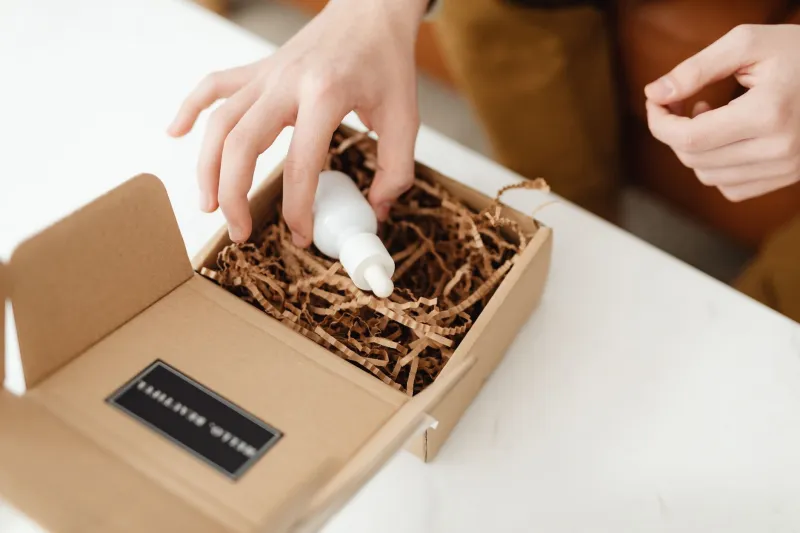
Before a single Apple product is approved for manufacturing, its packaging goes through hundreds of iterations. There are people at Apple whose entire job is to think about the precise amount of resistance a box lid should offer as you lift it—the specific drag that creates a moment of anticipation before the product is revealed. This is documented. It's not a rumor.
Where did Apple learn to think this way? You could make a reasonable argument that the answer involves a flight to Tokyo.
The Box Is the First Chapter
Japanese gift-giving culture has a concept that doesn't translate neatly into English: tsutsumi, the art of wrapping. The idea extends far beyond paper and ribbon. It encompasses the idea that how something is presented communicates the value placed on both the object and the recipient. A carelessly wrapped gift in Japanese social context isn't just aesthetically lacking—it's communicatively wrong. It says something unflattering about the giver's intentions.
Japanese product companies absorbed this cultural logic generations ago. The result is a packaging philosophy that treats the opening sequence as the first chapter of a product's story—not a container to be discarded as quickly as possible, but a designed experience that sets the tone for everything that follows.
Muji is the obvious starting point for any conversation about this. The brand's packaging is almost aggressively spare—kraft paper, minimal print, no unnecessary color. But that sparseness is itself a statement. Opening a Muji product feels like the brand is telling you something: we didn't waste resources on spectacle because the thing itself is what matters. That message is delivered entirely through packaging before the product is even visible.
Sony takes a different approach but operates from the same underlying logic. The packaging for Sony's higher-end audio products—the WH-1000XM series headphones, the α-series cameras—uses structure, material quality, and reveal sequence to build anticipation. There's a reason the headphones are nestled in a form-fitted case inside the box rather than sitting loose. The case is the first object. It tells you what kind of company made what's inside it.
The Anatomy of a Japanese Unboxing
Spend time with Japanese consumer electronics packaging and patterns emerge. There's almost always a considered layering—outer sleeve, inner box, protective materials that feel chosen rather than generic. There's an attention to the first thing your hands touch, which is frequently a texture rather than a visual. There's a sequence that controls what you discover and when.
Smaller Tokyo design studios have pushed this further. Brands like Noritake (the ceramics-to-stationery company with a devoted American following) and the stationery maker Stalogy package their products with a specificity that borders on choreography. The tissue paper is a particular weight. The seal placement is deliberate. Even the tape used to close the box has been considered.
This isn't precious or excessive—or rather, it's precisely as precious as it needs to be. The packaging communicates care, and the communication of care is a product feature. It shapes how you feel about what you're about to use before you've used it.
Why American Tech Companies Are Finally Paying Attention
For most of American tech's history, packaging was a logistics problem with a marketing layer on top. The box needed to protect the product during shipping and display the brand logo clearly at retail. Anything beyond that was considered waste.
Then something shifted. The rise of direct-to-consumer brands, the explosion of unboxing content on YouTube (which, at its peak, was generating billions of views annually), and the growing premium segment of the consumer electronics market all converged to make packaging a competitive variable in a way it hadn't been before.
Apple's influence here is hard to overstate, but Apple's packaging philosophy didn't emerge from American product culture. It emerged from Steve Jobs' documented obsession with Japanese aesthetics—specifically, the Zen minimalism and material precision he encountered during his early visits to Japan. The Apple unboxing experience is, in meaningful ways, a translation of Japanese packaging philosophy into an American tech context.
What's happened since is that the lesson has spread beyond Apple. Brands like Sonos, Bellroy, and even some software companies shipping physical goods have invested seriously in packaging as a storytelling medium. The indie creator economy—Kickstarter campaigns, direct-to-consumer hardware startups, limited-edition product drops—has made premium packaging a signal of legitimacy and intention.
The Ritual Function Nobody Talks About
There's a dimension of the Japanese packaging philosophy that gets less attention in business writing but might be the most important part: packaging creates ritual, and ritual creates memory.
The act of carefully opening a well-designed package is a transitional experience. It marks a before and after. You were a person who didn't own this thing; now you're a person who does; the opening ceremony is the moment of transformation. Japanese packaging design understands this and engineers it deliberately.
This is why the unboxing video phenomenon makes more sense than its critics give it credit for. People aren't watching other people open boxes because they're bored. They're watching because the opening is genuinely interesting—because good packaging makes the moment of revelation worth experiencing, even vicariously.
The community dimension matters here too. Unboxing culture has built genuine communities around shared product experiences. The Tokyo stationery community—hobbyists who collect, discuss, and share Japanese pens, notebooks, and paper products—has a thriving presence in the US, and a significant part of what binds that community together is the shared ritual of receiving and opening a carefully packaged product from Japan. The box is a social object as much as a physical one.
What the Best American Brands Are Getting Right
The American brands that have most successfully adopted Japanese packaging philosophy share a few characteristics. They treat the packaging as part of the product budget, not a separate line item to be minimized. They think about the opening sequence as a designed experience with a beginning, middle, and end. And they understand that the packaging makes a promise—and that the product needs to fulfill it.
The worst American attempts at premium packaging get the aesthetics right and the philosophy wrong. The box is beautiful but the sequence is thoughtless. The materials are expensive but they don't communicate anything meaningful. It looks like Japanese packaging without understanding what Japanese packaging is actually doing.
The difference is the difference between decoration and communication. Japanese packaging design isn't decorative—it's functional in the deepest sense. It's doing work. It's telling you something true about the object inside and the people who made it.
That's a harder thing to copy than a matte black finish and some tissue paper. But the brands that figure it out are building something that lasts longer than any single product cycle—a relationship with their customers that starts before the power button is ever pressed.