The Home That Disappears: Japan's Invisible Tech Philosophy and the Smart Home We Actually Want
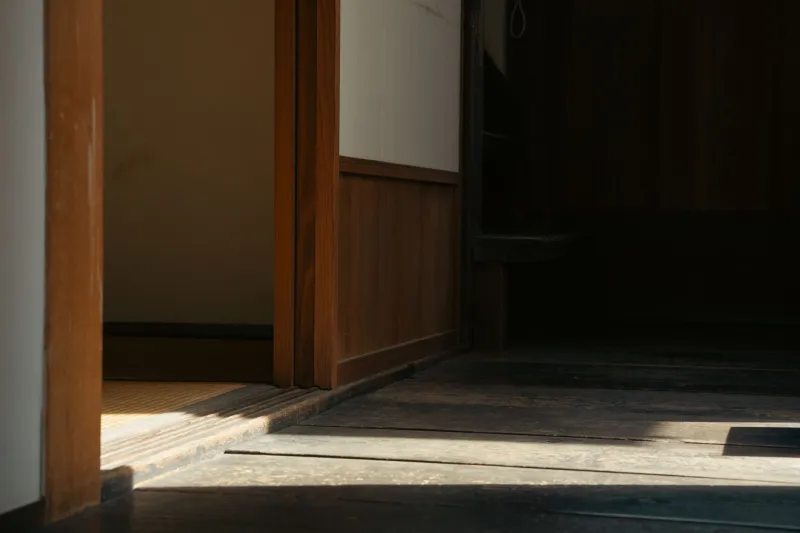
Imagine walking into your home after a long day and having absolutely nothing happen. No chime. No glowing ring. No disembodied voice announcing that it heard you come in. The lights adjust — slightly, almost imperceptibly — to the kind of warmth that signals the end of a workday. The thermostat has already accounted for the weather. The kitchen knows you haven't eaten since noon and has preheated the oven at a temperature that makes sense. None of this was triggered by a voice command. None of it required an app. It just happened, the way a well-designed room just works.
This is not science fiction. It's closer to the design philosophy that's been quietly shaping Japanese home technology for the better part of two decades. And it's almost the exact opposite of what American smart home companies have been selling us.
The Voice Command Trap
The American smart home, as currently constituted, is a product of a very specific cultural assumption: that control is the point. You tell the lights what to do. You command the thermostat. You interrogate your refrigerator about its contents. The interface is vocal, explicit, and constant. The home becomes a device you operate rather than a space you inhabit.
This model has real problems. For one, it requires you to be actively managing your environment at all times — which is the opposite of what most people actually want from their home. For another, it's socially awkward in ways that don't get discussed enough. Shouting commands at your ceiling while guests are over, or having your speaker randomly chime in during a quiet moment, creates a low-grade weirdness that accumulates. The technology is present in a way that makes the space feel less like yours.
And then there's the data dimension: every voice command is a data point, logged, processed, and stored somewhere. The smart home, as marketed, is also a surveillance infrastructure. Americans have mostly accepted this trade-off without examining it, partly because the alternative wasn't clearly articulated.
Japan has been articulating it for years.
Ma, Applied to Your Living Room
The Japanese concept of ma — negative space, the meaningful interval between things — has obvious applications in visual design and music. Its application to home technology is less discussed but arguably more profound. In the context of a living space, ma is the idea that the absence of stimulus is itself a form of quality. A room that doesn't demand your attention is a room that gives you back your attention. That's not emptiness. That's function.
Japanese home automation companies — Panasonic's housing division, Misawa Homes, and a cluster of smaller IoT developers — have built products around this principle for years. Sensors that track occupancy and light levels to adjust environments passively. Heating systems that learn behavioral patterns and adapt without prompts. Kitchen appliances that communicate with each other silently, through data, rather than through blinking lights and audio alerts.
The interface isn't a speaker in the corner. It's the room itself. The technology recedes until it's essentially invisible, and the experience is simply: things work.
Why American Consumers Are Ready for This
The data on smart home satisfaction in the US tells a story that the industry doesn't love to advertise. Adoption rates for voice-activated home devices have plateaued. A significant percentage of smart home devices purchased in the US go unused within six months — not because the technology failed, but because the interaction model was more friction than convenience. Setting up routines, troubleshooting connectivity, managing multiple apps across incompatible ecosystems: the cognitive overhead of the "smart" home turned out to be substantial.
Meanwhile, consumer sentiment research consistently shows that Americans' top priorities for home technology are — in order — reliability, simplicity, and unobtrusiveness. Not voice control. Not flashy interfaces. Not the ability to check their fridge from across the country. They want things to work without requiring them to think about it.
This is exactly what the invisible-tech model delivers. And as the US market matures, the conditions for a shift are there: consumers burned by overcomplicated systems, a growing wellness movement that's increasingly skeptical of screen saturation in the home, and a generation of younger buyers who've grown up with smartphones and are actively looking for domestic spaces that offer relief from them.
The Ecosystem Problem (and How Japan Solves It)
One of the structural reasons American smart home tech feels so fractured is the competitive ecosystem. Amazon, Google, and Apple are all building toward dominance, which means their devices are designed to pull you deeper into their respective platforms rather than to work seamlessly with everything else. The home becomes a battleground for market share, and the user experience reflects that tension.
Japanese home technology development has historically operated through a different set of incentives. Partnerships between housing developers and technology companies mean that automation systems get designed into the building from the start, rather than bolted on afterward. The goal is a unified environment, not a winning platform. The result is integration that feels organic because, architecturally, it is.
This model is starting to get traction in the US through the Matter smart home standard — an interoperability protocol backed by Apple, Google, Amazon, and others that allows devices from different ecosystems to communicate. It's a start. But the deeper shift isn't technical. It's philosophical. American smart home design needs to stop asking "what can we make the home do?" and start asking "what should the home do without being asked?"
Building the Home That Gets Out of the Way
The best version of a smart home is one you forget is smart. It wakes up with you, adjusts to your patterns, handles the low-level logistics of temperature and light and security without surfacing any of it to your conscious attention. It doesn't have a personality. It doesn't have a wake word. It doesn't need you to manage it.
That's not a cold or sterile vision. It's actually a deeply human one — the idea that technology should serve life rather than interrupt it, that the best interface is the one you never notice. Japan has been building toward this quietly, in basements and housing developments and engineering labs, for longer than most American consumers have owned a smart speaker.
The home that disappears is the home worth wanting. We just have to be willing to stop asking our ceilings for permission to want it.


