Clock Out, Tune In: How Japanese Work Rituals Are Curing America's Burnout Epidemic
Somewhere between the third Slack notification before 8 a.m. and the fourth all-hands Zoom call of the week, a lot of American workers quietly stopped caring. Not in a dramatic, quit-your-job way — though that happened too, spectacularly, during the Great Resignation — but in the slow, grinding way that burnout actually works. The passion drains out. The inbox becomes a treadmill. And Monday morning stops feeling like anything at all.
Here's the thing nobody in the productivity-app industrial complex wants to admit: more tools didn't fix it. More flexibility didn't fix it. What's quietly beginning to fix it, for a small but growing number of forward-thinking American companies, is something much older and much stranger — ritual.
Specifically, the kind of structured, intentional, almost ceremonial work practices that have been embedded in Japanese professional culture for generations.
The Meeting That Starts With a Breath
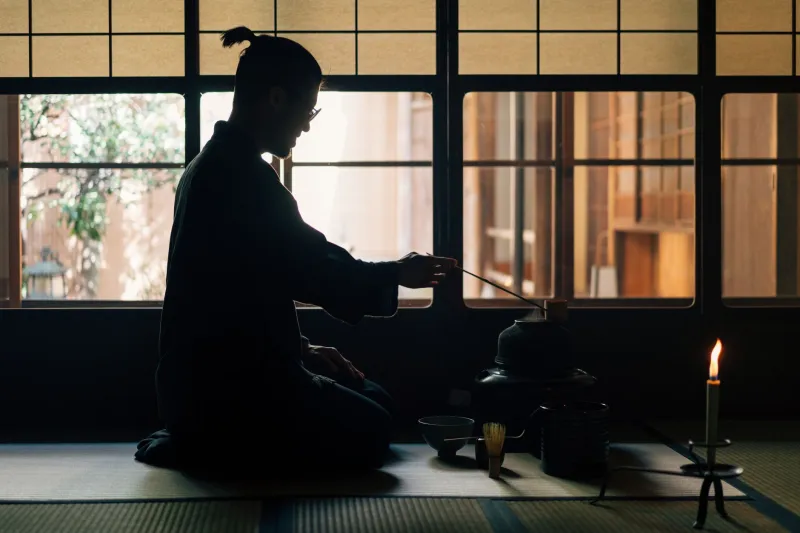
At a mid-sized design consultancy in Austin, Texas, every Monday morning meeting opens with two minutes of silence. No agenda items, no icebreakers, no "let's go around the room." Just two minutes where everyone settles in. The practice was borrowed, loosely, from the meditative pacing of Japanese tea ceremony — the idea that the ritual of preparation is inseparable from the value of what follows.
"It felt awkward the first three times," admits the company's co-founder. "By week six, people started showing up early just to get a seat before it started."
This isn't an isolated quirk. Across industries — from healthcare startups in Boston to architecture firms in Portland — a recognizable pattern is emerging. Companies are reaching toward structure not to control their employees, but to give the workday a shape that means something. Morning check-ins modeled on the Japanese practice of chorei (a brief, centering team gathering before work begins). End-of-day reflection periods echoing hansei, the Japanese tradition of honest self-review. Seasonal off-sites timed not to quarterly earnings but to the rhythms of the calendar year.
It sounds soft. The numbers suggest otherwise.
Ikigai Isn't a Poster — It's an Operating System
If you've spent any time on LinkedIn in the past five years, you've probably seen the ikigai Venn diagram. Four overlapping circles: what you love, what you're good at, what the world needs, what you can be paid for. The sweet spot in the middle is your ikigai — your reason for being, your sense of purpose.
Most American companies treat it like a motivational poster. Japanese work culture treats it like infrastructure.
The distinction matters enormously. In Japan, ikigai isn't something you find once and frame on your wall. It's something you actively tend. It shows up in how roles are defined, how mentorship is structured, how long-term career development is discussed — not just at annual reviews, but in small, ongoing conversations that acknowledge that a person's sense of meaning at work can shift, and that it's management's job to notice when it does.
Companies like Patagonia and Basecamp have been praised for building purpose-driven cultures, but what's newer is the explicit borrowing of Japanese frameworks to operationalize that purpose. Consultants who specialize in this space — and yes, that's now a real niche — describe it as moving ikigai "from aspiration to architecture."
What does that look like practically? It might mean quarterly conversations explicitly focused on whether someone's role still aligns with their strengths and interests — separate from performance reviews. It might mean building in what one Tokyo-based HR strategist calls "permission to pivot slowly," the idea that an employee can gradually shift their responsibilities toward work that feels more resonant without it being treated as a crisis.
Boundaries That Actually Hold
Japan has its own complicated relationship with overwork — karoshi, death by overwork, is a real and documented phenomenon, and it's not a model anyone should be importing. But alongside that shadow sits a different tradition: the fierce protection of temporal boundaries around certain kinds of work and rest.
The concept of ma — the meaningful pause, the intentional gap — shows up not just in Japanese design (we've written about it before) but in how time itself is structured at work. Lunch isn't eaten at a desk. The end of a project is marked with a shared meal or a small ceremony. The transition between seasons is acknowledged, not just on a calendar but in the physical environment of the office — different flowers, different teas, a brief team conversation about what the new season calls for.
These aren't perks. They're signals. They tell employees: this moment is distinct from the one before it. You are allowed to be fully here, and then fully somewhere else.
In a culture where "always-on" became the default setting for a decade of tech-driven work, that permission is almost radical.
Some American companies are beginning to codify this explicitly. A fintech firm in Chicago recently instituted what they call "closed hours" — two-hour windows in the morning and afternoon where no internal meetings can be scheduled and Slack notifications are muted by default. The policy was inspired, the CEO says, by reading about Japanese factory floor practices where focused work periods are protected as carefully as break periods.
Employee satisfaction scores went up. So did output quality. Funny how that works.
The Ceremony Isn't the Point — The Meaning Is
It's worth being clear about what's actually being borrowed here, and what isn't. American companies adopting Japanese work rituals aren't cosplaying a culture. The tea ceremony reference isn't about making everyone drink matcha before stand-ups (though, honestly, there are worse ideas). It's about the underlying logic: that the way you begin something shapes how you experience it. That transitions deserve acknowledgment. That the act of doing meaningful work is itself something worth treating with care.
Burnout, at its core, is a meaning crisis as much as an energy crisis. People don't just run out of hours — they run out of reasons. And no amount of unlimited PTO or free lunch fixes that if the underlying architecture of the workday says, implicitly, that your time has no shape and your presence has no ceremony.
What Japanese work culture — at its best, not its worst — understands is that meaning doesn't just come from the work itself. It comes from the rituals that frame the work. The way you gather. The way you pause. The way you mark the end of something and the beginning of something else.
That's not a productivity hack. That's a philosophy. And increasingly, it's the one American companies are quietly going back to school on.
The workday isn't just a container for tasks. Treat it like it matters, and — here's the part that keeps surprising people — it starts to.


