Schedule Nothing: How the Ancient Japanese Art of Pause Is Fixing America's Burnout Crisis
Somewhere between the fourth Slack notification of the morning and the third 'quick sync' of the afternoon, something breaks. Not dramatically—no one throws a laptop. It's quieter than that. A kind of slow dimming, like a phone battery that never quite charges back to full. American workers and founders know this feeling intimately. Researchers have a name for it: burnout. But increasingly, a small, vocal community of designers and tech leaders is reaching for a different vocabulary—a Japanese one.
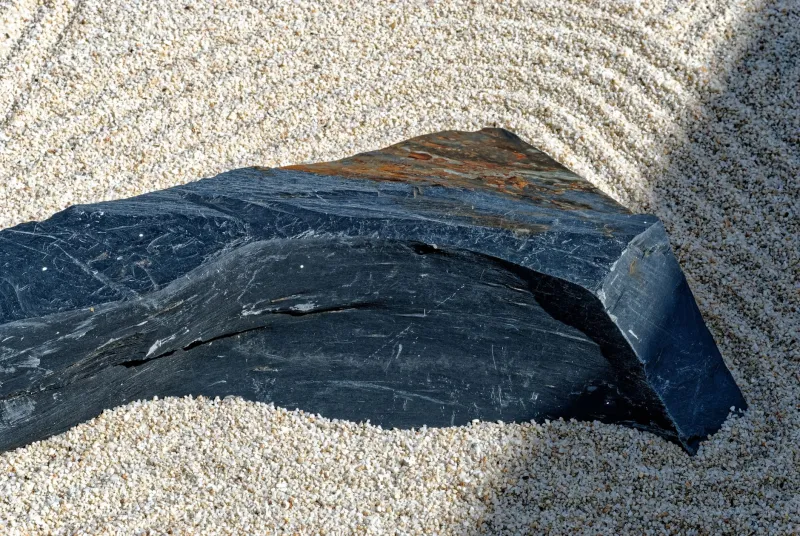
The word is ma (間). Pronounced somewhere between 'mah' and a breath you forgot to take, it translates loosely as 'negative space' or 'intentional gap.' But translation is where the easy part ends. Ma isn't just empty time or blank space on a page. It's the quality of that emptiness—the pause between notes in a piece of music that gives the melody meaning, the silence between two people in conversation that carries more weight than the words themselves. It's the reason a Japanese garden feels like a full experience even when half of it is gravel and air.
And right now, it might be the most radical productivity framework in tech.
The Cost of Constant
Let's be honest about what 'always-on' culture has actually built. A 2023 Gallup study found that 76% of American workers experience burnout at least sometimes, with nearly a third reporting it often or always. In the startup ecosystem, the numbers skew worse. Founders routinely describe their relationship with work as compulsive rather than intentional—checking metrics at midnight, responding to emails on vacation, treating rest as a competitive liability.
The irony is suffocating. An industry built on optimization has somehow optimized itself into exhaustion.
Jordan Vasquez, a UX director at a mid-sized SaaS company in Austin, hit that wall about two years ago. 'I was shipping faster than I ever had, and the work was getting worse,' she says. 'I thought the solution was more—more sprints, more standups, more output. Instead I needed to understand what I was afraid of when I stopped.'
What she found, through a combination of therapy and an unexpected obsession with Japanese architecture, was ma. 'There's this concept in Japanese spatial design where the empty space isn't decoration—it's load-bearing,' Vasquez explains. 'It holds the structure together. I started asking: what's the load-bearing emptiness in my creative process? And I'd been paving over it for years.'
Building Pauses Into the Product
Vasquez isn't alone in translating ma from philosophy to practice. A growing cluster of designers and product teams are experimenting with what some are calling 'gap design'—the deliberate engineering of pauses, transitions, and breathing room into both digital products and internal workflows.
At the product level, this looks like intentional micro-delays between user actions, whitespace that isn't just aesthetic but functional, and notification systems designed to interrupt less rather than more. One San Francisco-based design consultancy has started auditing client apps specifically for 'ma violations'—moments where the interface fills every pixel and every second with stimulus, leaving users no cognitive room to settle.
'We found that users were abandoning apps not because they were confused, but because they were tired,' says the consultancy's lead researcher. 'The product was technically excellent and experientially exhausting. Those aren't contradictions—that's just what happens when you optimize for engagement without ever designing for rest.'
At the workflow level, the experiments get even more interesting. Some teams are now scheduling what they call 'white blocks'—calendar time that is protected from meetings, tasks, and even self-directed work. Not meditation sessions. Not brainstorming. Literally nothing, held with the same institutional seriousness as a board meeting.
The Counterintuitive Competitive Edge
Here's where it gets strange: companies doing this are reporting better output, not less.
Marco Elias, CTO of a developer tools startup in Seattle, implemented mandatory 'gap hours' after his engineering team's velocity started stalling despite longer work weeks. 'We were treating every minute like it needed to produce something measurable. The team was technically present for more hours and generating fewer good ideas.' He blocked two hours every Thursday afternoon—no tickets, no standups, no Slack—and held the boundary even when the pressure to fill it was intense.
'The first month felt irresponsible,' he admits. 'The second month, we shipped the best feature we'd released in a year. One of the engineers had the core idea during a Thursday gap hour. He wasn't trying to solve a problem. He was just thinking.'
This tracks with what cognitive scientists have been saying for decades: the brain's default mode network—the system that activates during rest and mind-wandering—is critical to creative synthesis. You can't force it on. You can only stop preventing it.
Ma, in this sense, isn't a wellness trend. It's an engineering constraint.
Resonance, Not Silence
One thing worth clarifying: ma is not about doing less for its own sake. The Japanese aesthetic tradition isn't minimalist in the Western sense—it's not about stripping away until you reach some austere baseline. It's about resonance. The empty space amplifies what surrounds it. The pause makes the next note land harder.
That's a meaningfully different frame than the 'slow down to avoid burnout' messaging that tends to get dismissed as soft in tech circles. This isn't about self-care as a corrective to overwork. It's about recognizing that the gap is doing work—cognitive, creative, structural work—and that treating it as wasted time is a category error.
Vasquez puts it plainly: 'I don't schedule nothing because I need a break. I schedule nothing because nothing is part of the design.'
Where Tokyo Meets the Calendar
For American workers staring down a culture that still quietly equates busyness with worth, adopting ma requires something closer to a philosophical shift than a productivity hack. It means trusting that the pause is productive even when it doesn't look like it. It means resisting the anxiety that empty calendar space triggers—an anxiety that is, frankly, learned and not inevitable.
Tokyo's design culture has always understood something that Silicon Valley is only beginning to reckon with: the most powerful experiences aren't the densest ones. The garden with the gravel. The room with the single scroll. The conversation where someone lets the silence breathe before responding.
Scheduling nothing might be the most radical thing an American tech company does this year. And the most overdue.


