The Art of the Slow Build: What Japan's Obsession With Getting It Right Is Teaching Impatient Founders
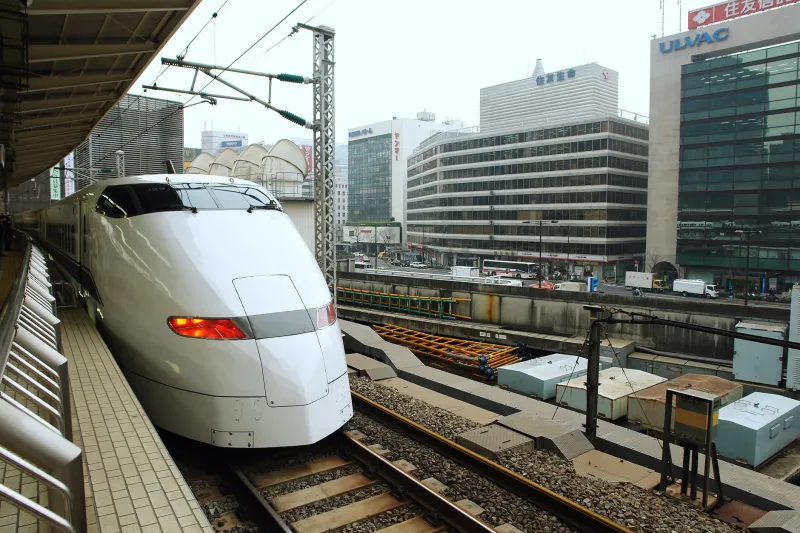
There's a reason Japan's trains are famous worldwide — not just for speed, but for precision. A Shinkansen doesn't pull into the platform "close enough" to on time. It arrives exactly on time, every time, because everyone involved in running it decided that anything less was unacceptable. That same cultural DNA runs through how Japan's most iconic companies build products, and it's starting to make Silicon Valley's perpetual beta culture look a little embarrassing.
We've spent the better part of a decade celebrating the hustle. Ship fast, learn faster. Break things, fix them in the next sprint. The MVP (minimum viable product) became something of a Silicon Valley sacrament — a permission slip to put half-finished work in front of real users and call it strategy. And honestly? For a while, it worked. Markets rewarded speed. Investors rewarded growth. Nobody seemed to mind the bugs.
But product fatigue is real now. Users are tired of being beta testers. And a quiet counter-movement is gaining ground among founders who've started looking east for inspiration.
Patience as Product Philosophy
Nintendo doesn't talk much about what it's working on. Sony's most celebrated hardware — the original PlayStation, the Walkman, the mirrorless camera lines that now dominate professional photography — didn't emerge from rapid iteration cycles. They came from years of internal refinement before a single unit hit a shelf. Sharp's Aquos display division reportedly spent close to a decade perfecting certain screen technologies before commercializing them. These aren't anomalies. They're the norm in a culture that treats a product launch not as a starting line, but as the moment you've finally earned the right to show up.
The Japanese concept at the heart of this is monozukuri — loosely translated as "the art of making things." But it's more than craftsmanship. It's a philosophical commitment to the entire process of creation, treating manufacturing and design as disciplines worthy of deep, ongoing devotion. In practice, that means engineering teams that stay with a single product category for decades, iterating internally rather than publicly, and building institutional knowledge that compounds over time.
Compare that to the average Silicon Valley product team, where engineers rotate every 18 months, roadmaps shift with every funding round, and "legacy code" is practically a slur.
The Hidden Cost of Shipping Fast
Here's what the move-fast playbook doesn't always account for: trust is slow to build and fast to lose. When you ship something broken and patch it later, you're making a quiet bet that your users will forgive you. Mostly, they do — until they don't.
Look at what's happened in the consumer tech space over the last few years. Devices with software that degrades after updates. Apps that launch features before they're stable. Hardware refreshes that feel like they were rushed out to meet a fiscal quarter, not because the product was ready. Users notice. The reviews notice. And increasingly, the market is starting to notice too.
Meanwhile, Nintendo releases a console and it works. Every time. The Switch launched in 2017 with a library of software that felt finished, polished, and intentional. Seven years later, it's still selling. That's not luck. That's what happens when a company decides that the launch moment carries weight — that putting something imperfect into the world has a real cost that doesn't show up immediately on a dashboard.
American Founders Are Taking Notes
The shift is subtle, but it's happening. Founders at smaller hardware and software companies — particularly those who've spent time in Japan or worked with Japanese manufacturing partners — are starting to build longer development cycles into their roadmaps deliberately. Not because investors are asking them to, but because they've watched what happens to companies that ship prematurely and spend years trying to repair their reputation.
Some are applying the principle to software in ways that feel almost countercultural right now. Longer private betas. Smaller, more intentional launch audiences. Features held back until they're genuinely ready rather than "good enough for now." It's the kind of discipline that's hard to maintain under investor pressure, but the companies doing it are building something that's increasingly rare: a reputation for reliability.
There's also something worth noting about how Japanese product teams communicate internally. The concept of nemawashi — building consensus slowly, making sure everyone is aligned before moving forward — looks inefficient from the outside. But it means that when a decision is finally made, it sticks. There's no backtracking, no pivoting away from a core feature two weeks before launch because one executive changed their mind. The slow consensus process up front saves enormous amounts of time and rework on the back end.
Rethinking What "Fast" Actually Means
Here's the reframe that's starting to resonate with the founders who get this: Japanese companies aren't slow. They're just measuring time differently.
When Sony spends three years perfecting a sensor before putting it in a camera, they're not behind schedule — they're building a product that will define a category for a decade. When Nintendo holds a game in development longer than expected, they're protecting a franchise that's worth billions. The investment horizon is just longer. The definition of "fast" includes the years you don't spend doing damage control after a bad launch.
Silicon Valley has always been good at moving quickly through the early stages of a product's life. Japan has long been exceptional at the middle and the end — at sustaining quality, deepening a product's value over time, and maintaining user trust across generations of hardware and software. Those aren't opposing philosophies. They're complementary ones, and the founders smart enough to blend them are building some of the most interesting companies right now.
The Train Is Worth Waiting For
There's something almost meditative about standing on a Japanese train platform and watching the departure board count down to the second. Nobody's rushing. Nobody's anxious. Everyone knows the train will arrive exactly when it's supposed to, and that knowledge changes how the whole experience feels.
That's the product experience Japanese companies have been quietly engineering for decades — the feeling that what you're holding was made by people who cared enough to get it right before it reached your hands. In a market saturated with half-finished apps and hardware that needs a day-one patch, that feeling is becoming a genuine differentiator.
Patience, it turns out, might be the most underrated feature a product team can ship.