Slow Your Roll: Why Silicon Valley's Obsession With Speed Is Losing to Japan's Culture of Anticipation
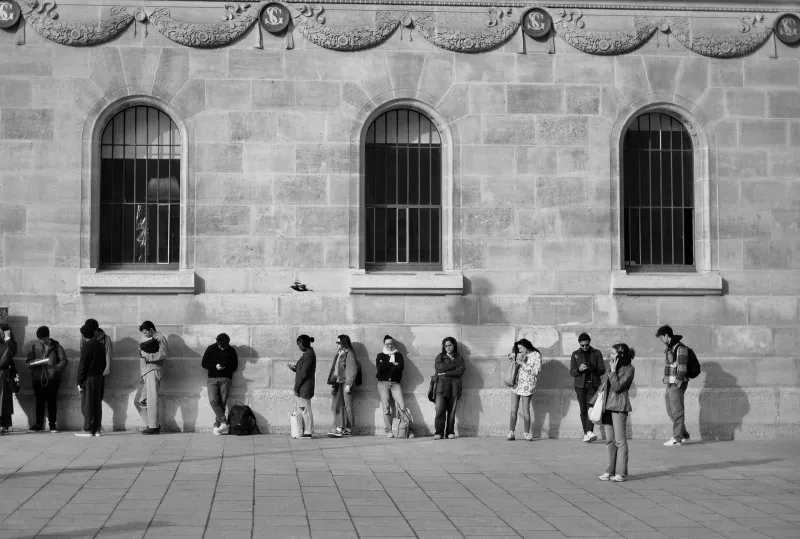
There's a ramen shop in Tokyo's Nakameguro neighborhood where the line starts forming about forty-five minutes before the doors open. Nobody's complaining. Nobody's refreshing a waitlist app or rage-texting their friends. They're just... waiting. And when the bowl finally arrives — rich, precise, deeply considered — the experience lands with a weight that a fast-casual equivalent never could.
Now ask yourself: when was the last time an app launch felt like that?
Silicon Valley built its entire identity on the idea that speed equals value. Ship fast, iterate faster, and flood the zone before anyone else gets there. The "move fast and break things" era wasn't just a slogan — it was a worldview baked into product roadmaps, investor decks, and the cultural mythology of the overnight unicorn. But something interesting is happening in pockets of the tech industry right now. A quieter, more counterintuitive philosophy is gaining traction — one that looks a lot less like a sprint and a lot more like a very deliberate, very Japanese walk.
The Japanese Art of Making You Wait (And Loving It)
In Japan, waiting isn't a failure state. It's part of the product. The concept of kisetsukan — a deep attunement to seasonality — shapes everything from food menus to fashion releases to the way software companies roll out features. Products appear when the timing is right, not when the engineering team cleared their backlog. Sakura-flavored everything doesn't show up in December. That specificity, that restraint, creates a psychological contract with the consumer: this matters, and so does your anticipation of it.
Then there's the machikutabireru phenomenon — the particular exhaustion of waiting that, paradoxically, sharpens desire. Japanese consumer culture has long understood that friction, when designed thoughtfully, doesn't repel customers. It qualifies them. The people who wait in that Nakameguro line aren't just hungry. They've self-selected into an experience they've already emotionally invested in.
American tech, for the most part, has treated friction as the enemy. Remove the steps. Shorten the funnel. Eliminate every possible moment where a user might think twice. But thinking twice, it turns out, might actually be the thing that makes people stick around.
The Waiting List Renaissance
Remember when Robinhood launched with a waitlist that had people frantically sharing referral links just to move up the queue? Or when Clubhouse, at its peak, felt genuinely exclusive because you needed an invite to get in? Those weren't just growth hacks. They were — whether intentionally or not — applications of a very old principle: scarcity creates meaning.
More recently, companies are getting more deliberate about this. Notion spent years in a slow, almost secretive beta before opening its doors wide. Linear, the project management tool beloved by engineering teams, built its entire brand identity around a controlled, considered rollout. You didn't just sign up — you applied, you waited, and by the time you got in, you were already a believer. The product hadn't changed. But your relationship to it had.
This approach maps almost perfectly onto the Japanese concept of ikkan — consistency and coherence over time. The product isn't just a tool; it's a statement about values. And that statement is made partly through what the company refuses to do: rush, bloat, or compromise the experience for the sake of growth metrics.
What the Data Is Actually Saying
Here's where it gets interesting for the spreadsheet crowd. Companies that have embraced deliberate pacing aren't just feeling good about their brand philosophy — they're seeing measurable differences in user behavior.
Research from behavioral economists like Dan Ariely has long supported the idea that effort investment increases perceived value — what's sometimes called the IKEA effect. When users work even slightly harder to access something, they value it more. Applied to onboarding, this means that a slightly longer, more intentional setup process can actually increase day-30 retention compared to a frictionless instant-access flow.
Beehiiv, the newsletter platform, built a deliberate onboarding sequence that walks creators through setup over several days rather than dumping them into a dashboard. Their activation rates — users who complete meaningful first actions — outperform industry benchmarks. Duolingo, despite being a fast-growth darling, has leaned into streak culture and delayed reward mechanics that are structurally identical to what you'd find in a Japanese gachapon machine or a seasonal menu reveal.
The pattern is consistent: when users feel like they've earned something, they protect it.
Slowing Down the Launch
Beyond onboarding, some companies are rethinking the product launch itself. The traditional playbook — big splash, press blitz, Product Hunt front page — optimizes for a single day's attention. But attention isn't loyalty. And in a media environment where every launch competes with seventeen others happening simultaneously, the spike-and-fade cycle is getting harder to escape.
A growing number of indie developers and smaller tech studios are experimenting with what you might call the omakase launch model — a chef's choice approach where the company controls the pacing, the reveal, and the narrative arc of a product's introduction to the world. Instead of everything at once, you get a considered sequence. A teaser. A private beta with a curated community. A gradual opening. By the time general availability hits, there's already a culture built around the product.
This isn't nostalgia for the pre-internet era. It's a recognition that the internet's infinite immediacy has a serious downside: nothing feels special anymore when everything is available right now.
Anticipation as a Design Material
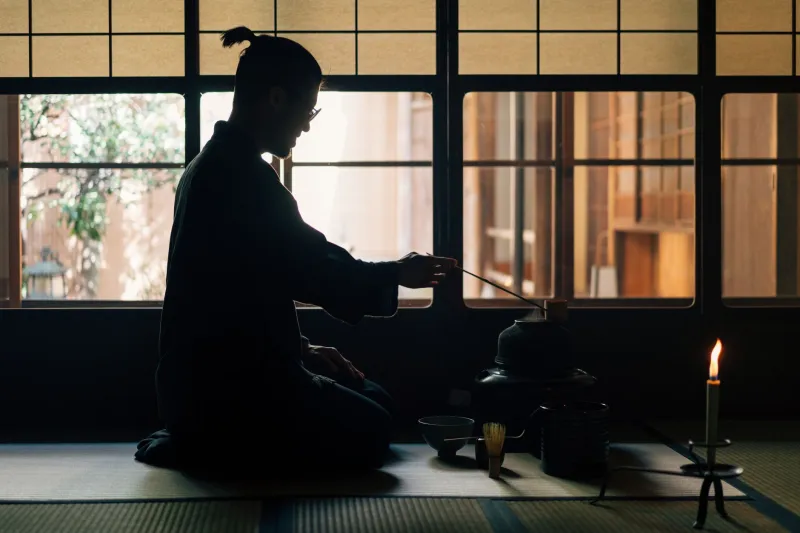
What Japan figured out centuries ago — through tea ceremony, seasonal cuisine, the controlled reveal of a garden through a winding path — is that anticipation is itself an experience worth designing. The journey to the thing is part of the thing.
For American tech, that's a genuinely radical idea. Not because it's complicated, but because it requires giving up control of the timeline. It means trusting that your users can handle waiting. It means believing that the product is worth waiting for.
Some companies are starting to believe it. And their retention numbers are quietly making the case that the ramen line in Nakameguro might just be the most sophisticated UX experiment running right now.
The irony is delicious: in an industry that worships speed, the competitive advantage might belong to whoever learns to slow down first.
Welcome to the waiting room. Pull up a chair — it's worth it.