Basement Frequency: Why the Creators Who Stopped Chasing the Algorithm Are Building Something That Lasts
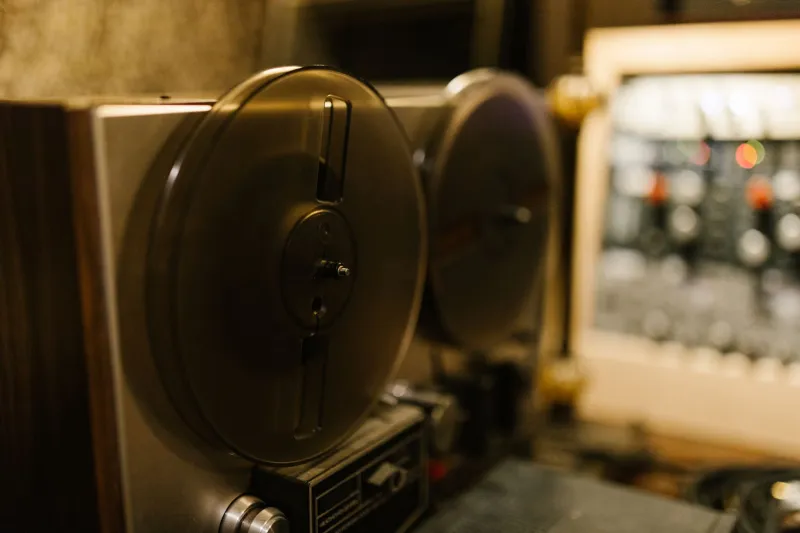
Somewhere in Shimokitazawa — Tokyo's famously scruffy, record-shop-dense neighborhood — a producer is finishing a cassette run of 200 copies. Not 200,000. Not even 2,000. Two hundred. The tape will sell out in a weekend, mostly to people who already know this artist's work, who came specifically because they trust what's on the other side of that plastic shell. No algorithm surfaced this release. No trending sound carried it anywhere. It spread the way music used to spread: person to person, with actual stakes attached.
In Brooklyn, in Austin, in a spare bedroom in Columbus, Ohio, a growing number of American creators are watching this model and thinking: what if that's the point?
The Optimization Trap
Let's be honest about what the algorithm actually optimizes for. Not quality. Not connection. Not the kind of work that makes someone feel genuinely seen. It optimizes for the next ten seconds of watch time, and then the ten seconds after that. The result, for creators who follow its logic all the way down, is a kind of creative homogenization that's hard to see when you're inside it but obvious the moment you step back.
Posting schedules become content factories. Hooks get sharper and shallower simultaneously. The comment section fills up with people who found you through a sound you used once and will leave the moment that sound stops trending. You can build a massive audience this way. You can also wake up one morning and realize you have no idea what you actually make anymore.
This is the trap. And it's not hypothetical — it's the dominant experience of mid-tier creators right now, the ones with enough followers to feel the pressure but not enough leverage to ignore it.
What Tokyo's Basement Studios Do Differently
Japan's underground music scene — particularly the network of small studios, collectives, and listening bars that have been quietly thriving in Tokyo neighborhoods like Koenji, Nakameguro, and Sangenjaya — operates on a fundamentally different set of assumptions. Output is intentional and infrequent. Releases are treated as events rather than content units. The relationship between artist and audience is built slowly, through repeated, meaningful encounters rather than algorithmic exposure.
This isn't nostalgia. It's a working model. Artists in these communities often have day jobs, release music on their own schedules, and maintain deep relationships with a few hundred or few thousand dedicated listeners rather than chasing the kind of scale that demands constant output. The economics are leaner, but the creative autonomy is real — and so is the longevity.
The concept threading through all of this is ma — the Japanese principle of meaningful space, of what exists between notes rather than in spite of the absence of them. Applied to creative output, it means the gap between releases isn't dead air. It's where anticipation lives.
American Creators Who Are Making the Shift
You can see this philosophy taking root in pockets of the American creator economy, though the people practicing it rarely frame it in these terms. They just know something changed when they stopped posting every day.
Take the growing cohort of newsletter writers who've moved from weekly to biweekly or monthly schedules and watched their open rates climb. Or the YouTube essayists who release four videos a year, each one a genuine production, and whose comment sections read less like a crowd and more like a conversation. Or the musicians releasing music exclusively on Bandcamp — platform of choice for the intentional-batch crowd — to audiences of a few thousand who actually buy things.
What these creators share isn't a rejection of digital platforms. It's a rejection of the platform's tempo. They're using the tools without letting the tools dictate the pace.
Depth as a Distribution Strategy
Here's the counterintuitive business case: smaller, more intentional audiences convert better. They buy merchandise. They show up to live events. They recommend your work to people who are genuinely likely to care about it. They stick around when you change direction, because they followed you, not an algorithm's thumbnail prediction of you.
This is not a new insight in music. It's basically the entire theory behind the 1,000 True Fans model that Kevin Kelly outlined back in 2008. But the creator economy spent the next fifteen years building infrastructure that made that model feel quaint — until recently, when the platforms started cannibalizing the mid-tier audience so aggressively that the math stopped working for everyone except the very top.
The Tokyo basement studio model offers a practical corrective. Make something specific. Make it well. Release it when it's ready, not when the posting calendar says it's due. Trust that the people it's for will find it — and that those people are worth more, creatively and economically, than the ones who stumbled across it between videos about something else entirely.
The Frequency Worth Tuning Into
There's a word in Japanese — kodawari — that roughly translates to an obsessive, almost irrational commitment to craft. It's the ramen chef who's been perfecting the same broth for thirty years. It's the producer spending six months on a cassette run of 200. It's the creator who turns down brand deals because the product doesn't fit what they're building.
Kodawari doesn't scale. That's the whole point. It produces work that feels like it was made by a specific human being with specific values, and in a media environment drowning in content generated at algorithmic speed, that specificity is increasingly rare and increasingly valuable.
The basement frequency is real. It's quiet, it's patient, and it builds something the algorithm was never designed to create: trust.