Dim the Room, Sharpen the Mind: What Japanese Lighting Design Knows That America's Offices Don't
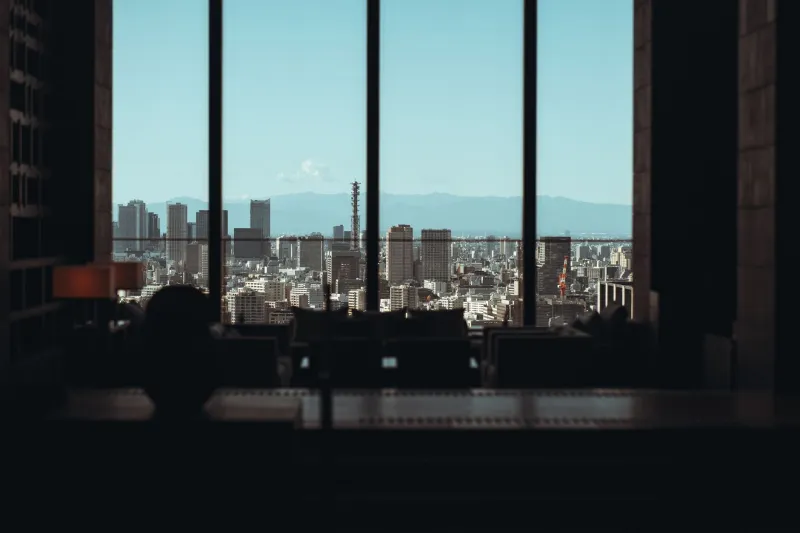
Walk into most American offices and your eyes adjust to something that feels less like a workspace and more like a confession room. Overhead fluorescents hum at full throttle, bouncing off white drop ceilings and laminate desks, flooding every corner with the kind of aggressive brightness that says we see everything you do. It's utilitarian. It's exhausting. And according to a growing number of designers, architects, and neuroscientists, it's quietly wrecking our ability to think.
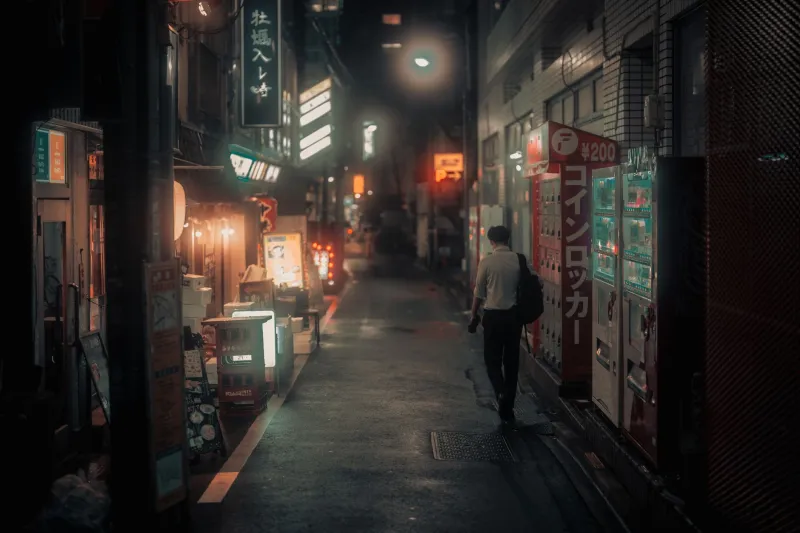
Now look at the other end of the spectrum — quite literally. In Tokyo's best-designed studios, restaurants, hotels, and yes, offices, light behaves differently. It pools. It layers. It hides in corners and glows from behind panels. It suggests rather than announces. And the effect isn't just aesthetic. It's psychological.
The Philosophy Behind the Glow
Japanese lighting design doesn't start with lumens or wattage. It starts with ma — that untranslatable concept of meaningful negative space — applied to illumination rather than architecture. Just as a well-designed room uses emptiness to give weight to what's present, Japanese lighting uses shadow to give meaning to what's lit.
This isn't a new idea. Traditional Japanese interiors — shoji screens filtering afternoon sun, paper lanterns casting warm amber pools, tokonoma alcoves spotlit by a single indirect source — have been engineering psychological comfort through light for centuries. What's new is that contemporary Japanese designers are applying these same principles to modern workplaces, tech campuses, and home offices in ways that American designers are only beginning to take seriously.
Design firm Nendo, founded by Oki Sato and widely regarded as one of the most influential studios working today, has made lighting a recurring site of experimentation. Their approach consistently avoids the obvious. Fixtures are hidden. Sources are indirect. The goal is never to illuminate a room uniformly but to create what Sato has described as a kind of visual breathing — spaces that feel alive because not everything is equally visible at once.
What Brightness Is Actually Doing to Your Brain
Here's where the science gets uncomfortable for anyone who's ever defended a 500-lux open-plan office.
Research from institutions including Cornell and the Lighting Research Center has consistently found that high-intensity overhead lighting — particularly cool-toned fluorescent and LED — elevates cortisol levels, disrupts circadian rhythms, and contributes to what's colloquially known as decision fatigue. Basically, your brain reads harsh, uniform brightness as a stress signal. It's the same physiological response triggered by being outdoors in the middle of a blazing summer afternoon, except you're sitting at a desk for eight hours straight.
Conversely, lower ambient light with targeted task illumination — the layered approach central to Japanese interior design — has been linked to improved focus, reduced eye strain, and even higher rates of creative problem-solving. A 2013 study published in the Journal of Environmental Psychology found that dimmer environments actually encouraged more abstract thinking. The brain, less stimulated by its visual surroundings, turns inward. It connects dots.
This isn't soft science. It's the kind of finding that should be reshaping how we design every office in America. And yet, walk into any mid-sized tech company in Austin or Seattle, and you'll still find yourself squinting under a grid of recessed LEDs cranked to maximum output.
Apple's Quiet Acknowledgment
To be fair, some American companies have started paying attention — even if they haven't always articulated why.
Apple's retail stores have long used carefully layered lighting to create what feels like a gallery environment rather than a showroom. Spotlights highlight products without flooding the floor. Ambient light is warm and low. The ceiling recedes visually, making the space feel larger and calmer than it actually is. This is not accidental. Jony Ive and the design team spent years studying how light interacts with product surfaces, and the retail experience reflects that obsession.
Apple Park, the company's main campus, takes it further. The interiors use natural light aggressively — curved glass, interior courtyards, adjustable shading — to create spaces where the quality of light shifts throughout the day. It's as close as an American tech campus has come to embedding Japanese lighting sensibility into a working environment at scale.
But Apple is the exception, not the rule. Most companies treat lighting as infrastructure rather than design. It goes in during construction, gets adjusted never, and becomes part of the invisible background of workplace misery that nobody talks about because nobody thinks they're allowed to.
Remote Work Changed the Conversation
The pandemic did something unexpected to America's relationship with light. When millions of workers migrated to home offices, they suddenly had control over their environments in ways they never did in corporate spaces. And a lot of people — instinctively, without reading a single design manifesto — turned the overhead lights off.
Desk lamps. Bias lighting behind monitors. Warm-toned smart bulbs set to 40 percent brightness. The remote work aesthetic that emerged on Zoom calls and YouTube setups often looked, whether intentionally or not, a lot like a Japanese interior design principle in action: layered, indirect, purposeful.
Productivity influencers and interior designers on social media started talking about "lighting zones" and "ambient versus task light" in ways that would have seemed precious five years ago. Now it's mainstream enough that IKEA runs ads about it.
The lesson the pandemic surfaced is one Japanese designers have been living for decades: people, when given the choice, gravitate toward light that feels human. Warm. Varied. Soft around the edges.
Designing Forward
So what does this mean for the future of workplace design — especially as hybrid work reshapes what offices are even for?
The most forward-thinking architects and interior designers are already treating lighting as a dynamic system rather than a static installation. Tunable LED technology now allows offices to shift color temperature and intensity throughout the day, mimicking natural light cycles and supporting circadian health. Some Tokyo offices have been doing this for years. American companies are catching up, slowly.
More importantly, the conversation is shifting from how much light to what kind of light, where, and why. That's a fundamentally Japanese question — one rooted in the idea that a space's job isn't just to function but to feel right. To support the people inside it. To make thinking easier, not harder.
Brightness, it turns out, was never the point. Clarity was. And those two things are not the same.
If American workplace design is serious about the mental health crisis, the productivity plateau, the burnout epidemic it keeps publishing think pieces about, it might want to start by looking at the ceiling — and then, for once, turning it down a little.