Smarter Than a Shelf: What Japan's Vending Machine Intelligence Is Telling Us About the Future of Buying Stuff
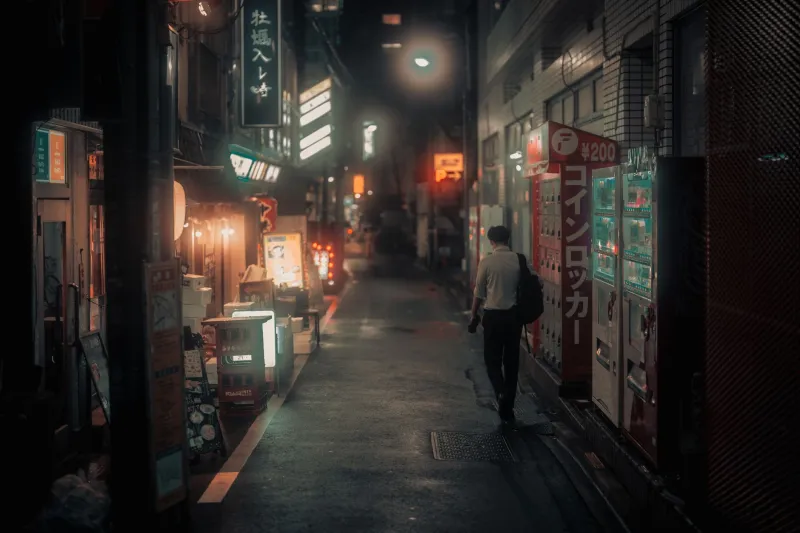
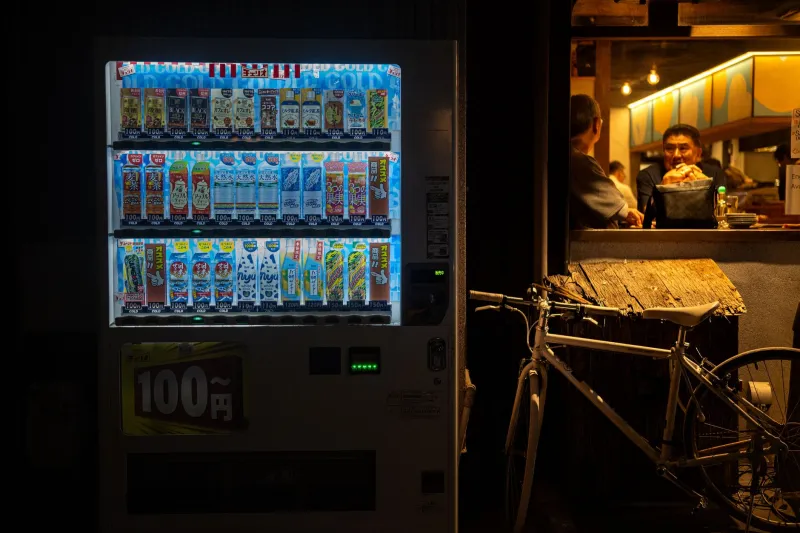
There are roughly 5.5 million vending machines in Japan. That's one for every 23 people. You can buy hot ramen, fresh flowers, umbrellas, surgical masks, and — yes — whole canned cheeseburgers. You can pay with cash, IC card, QR code, or a tap of your phone. The machine knows what's popular on a rainy Tuesday afternoon in Shinjuku, and it adjusts its own pricing accordingly.
Meanwhile, in the United States, we're still wrestling with whether our self-checkout kiosks can correctly identify a banana.
This isn't a cheap shot at American retail — it's a genuine question worth sitting with: Why has Japan built what amounts to a distributed, AI-assisted commerce network spanning every train platform, hospital hallway, and mountain hiking trail in the country, while the US is still treating vending machines like glorified snack lockers? And more importantly, what does the answer tell us about where shopping is actually headed?
The Tech Stack Nobody's Talking About
Let's start with what's actually inside a modern Japanese vending machine, because the engineering is quietly wild.
Top-tier units from manufacturers like Fuji Electric and Sanden deploy real-time inventory sensors that communicate with central distribution networks, automatically flagging restocking needs before a single slot runs empty. Facial recognition cameras — standard on many machines in urban areas — estimate a customer's age and gender, then surface product suggestions tuned to that profile. Outdoor machines monitor local weather data and shift their displayed inventory in real time: hot drinks push to the front when temperatures drop, cold beverages dominate on humid summer days.
Payment infrastructure is equally sophisticated. Japan's Suica and Pasmo IC cards — originally designed for train fare — became de facto micro-payment systems years ago, creating a frictionless tap-and-go experience long before Apple Pay was a glimmer in Cupertino's eye. QR-based payment apps like PayPay have layered on top of that, meaning a single machine might accept five or six distinct payment methods without breaking a sweat.
The data loop this creates is genuinely impressive. Every transaction feeds back into a network that operators use to optimize product mix, pricing, and placement — not just for one machine, but across entire regional fleets. It's less a vending machine and more a micro-retail node in a living commerce graph.
Why American Companies Keep Getting This Wrong
US retailers and tech companies have been circling Japan's vending ecosystem for years, trying to crack the formula. Amazon's cashierless Go stores borrowed heavily from the same frictionless-transaction philosophy. Startup after startup has pitched "smart vending" solutions with computer vision, dynamic pricing, and app-based loyalty programs.
Most of them have struggled.
The hardware isn't the problem. American engineers can absolutely build a machine with inventory sensors and a touchscreen interface. The gap is cultural, and it runs deeper than most tech roadmaps are built to address.
In Japan, the vending machine earned its ubiquity by being genuinely, obsessively useful. It showed up in places where no staffed retail could economically exist — the late-night train platform, the remote mountain rest stop, the hospital corridor at 2 a.m. It didn't replace human service; it filled the honest void where human service was never coming. And it delivered on that promise consistently, reliably, without drama.
American retail's instinct, by contrast, is to deploy convenience as a marketing layer on top of an experience that was already fine. Self-checkout didn't make grocery shopping better — it transferred labor costs to the customer and called it innovation. Amazon Go is a genuinely clever technical achievement, but it launched in upscale urban neighborhoods where shopping was already easy. The frictionlessness was a feature for people who were never really suffering from friction.
Japan built convenience as infrastructure. America keeps building it as a product differentiator. Those are fundamentally different design briefs.
The Micro-Moment Economy
Here's the insight that Japan's vending ecosystem has been quietly validating for decades: people don't want to shop. They want to have. The entire act of acquisition — browsing, deciding, paying, waiting — is friction. Every second of it is a small tax on the thing you actually wanted.
Japan's machines compress that process to near zero. You see it, you tap, you have it. The decision is pre-made by a machine that already knows what's likely to appeal to you, at this location, in this weather, at this time of day. The cognitive load is almost nothing.
This is exactly what US tech companies say they want to build — and exactly what they consistently fail to deliver, because they approach it as a conversion optimization problem rather than a service design problem. The question isn't "how do we reduce clicks to purchase?" It's "how do we make the machine's presence feel like a genuine act of care for the person standing in front of it?"
That's a UX question. It's also, honestly, a cultural one.
What Actually Translates
None of this means American retail should try to import Japan's vending culture wholesale. That's not how cultural technology transfer works, and the graveyard of "Japan-inspired" concepts that flopped on US soil is long enough to serve as a warning.
But there are real, actionable principles embedded in the Japanese model that US companies could actually use.
Placement is a service commitment. If you're going to put a smart retail node somewhere, put it where it solves a real problem — not where it's most visible to foot traffic. Hospital lobbies, transit hubs, college campuses at midnight. Go where the gap is.
Reliability is the product. Japan's vending machines work. Every time. That's not an accident — it's the result of aggressive maintenance schedules and operator accountability. In the US, a "smart" vending machine that's out of stock, offline, or glitching is worse than no machine at all. Trust is the actual offering.
Data should serve the customer, not just the operator. The dynamic pricing and inventory intelligence in Japanese machines ultimately makes the experience better for the person standing in front of it. If your data infrastructure only benefits your margins, you've missed the point.
Payment friction is a deal-breaker. Japan's IC card ecosystem took years to build, but it made every machine feel effortless. US operators who still rely on credit card swipes or proprietary apps are leaving the most important part of the experience on the table.
The Longer Signal
Japan's vending machine network is sometimes framed as a quirky cultural artifact — a fun thing to photograph when you're visiting Tokyo. That framing undersells it badly.
What Japan built, over 60-plus years of iteration, is a model for distributed, intelligent, human-scale commerce that operates without staff, without storefronts, and without the overhead that makes traditional retail increasingly untenable. As US labor costs rise, real estate markets stay volatile, and consumer patience for friction continues to shrink, that model starts looking less like a curiosity and more like a blueprint.
The machines were never really about snacks. They were about the quiet, persistent question of how you design a system that genuinely serves people — not just efficiently, but thoughtfully.
America's retail future is going to have to answer that question eventually. Japan's been working on the answer for decades. The smart move is to actually read what it's saying.