Glorious Limitations: How Tokyo's Retro-Tech Rebels Are Making Silicon Valley Look Exhausting
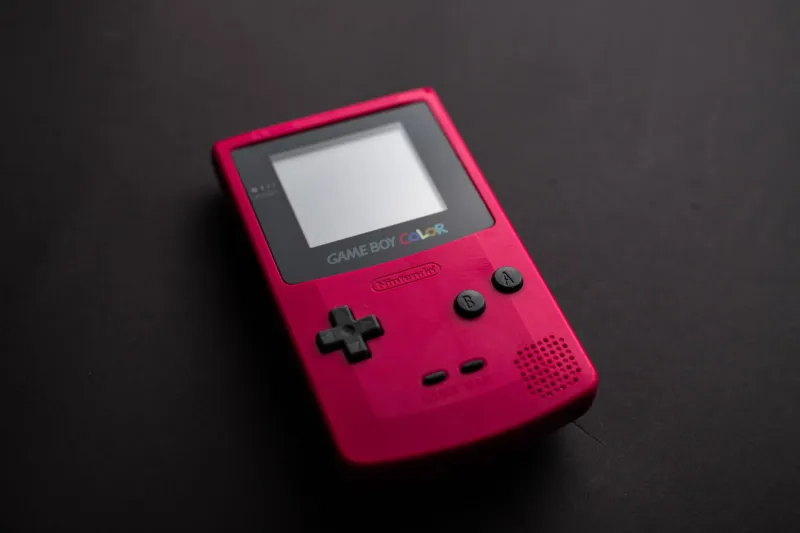
Let's talk about the Game Boy.
Nintendo's original handheld launched in 1989 with a green-tinted monochrome screen, four-color graphics, and a battery life that made modern portable gaming look embarrassing by comparison. It was, by every measurable specification, a worse device than what came before it in the home console space. Nintendo's own engineers reportedly called it inferior to competing handhelds on the market at launch.
It sold 118 million units over its lifetime and is still being actively used today. New cartridge games are still being developed for it in 2024. A functioning original Game Boy in good condition sells for more on eBay than it cost new, adjusted for inflation.
Something about this story should make the product teams at every major tech company deeply uncomfortable.
The Upgrade Treadmill Has a Dropout Problem
The modern consumer electronics industry runs on a model that requires perpetual dissatisfaction. Every product cycle needs to make last year's device feel inadequate. Every software update needs to introduce features that justify the $999 you're about to spend on a new phone that is, in most practical ways, nearly identical to the one you already own.
For a long time, this worked. The improvements were real and the consumers were willing. Then somewhere around the late 2010s, the marginal gains started getting marginal in ways that were hard to ignore. The cameras got better, sure, but most people's photos were already good enough. The screens got sharper, but human eyes have limits. The processors got faster for tasks that were already instantaneous.
Japanese consumers, who have historically been among the most demanding and sophisticated electronics buyers in the world, started checking out of this cycle earlier than most. And a fascinating cottage industry grew up to serve them.
Tokyo's Intentional Throwbacks
Walk through Akihabara—Tokyo's electric town, equal parts hardware heaven and beautiful chaos—and you'll find stores dedicated entirely to refurbished vintage electronics. Not as curiosities. As daily-use devices with active communities of dedicated users. But the more interesting development isn't the vintage market itself. It's the emergence of companies building new products that are intentionally designed to feel old.
Fujifilm's Instax line of instant cameras has become a global phenomenon, but its design language is rooted in a specific Japanese aesthetic of cheerful, approachable analog technology. The cameras don't connect to your phone. They don't upload to the cloud. They produce a physical print that you hold in your hand, and that limitation is the entire point.
The Playdate—designed in collaboration with Tokyo-based design studio Teenage Engineering—ships with a hand crank. A literal hand crank, on a video game console, in 2024. Its black-and-white screen has no backlight. Games are delivered in "seasons" rather than a continuous content stream. Every constraint is deliberate, every limitation a feature.
Then there's the revival of the flip phone, which in Japan never fully died. Japanese manufacturers have continued releasing clamshell devices for a domestic market that never entirely abandoned them, and now that form factor is experiencing genuine renewed interest from younger American consumers who are, in increasing numbers, experimenting with dumb phones and minimalist devices as a response to smartphone fatigue.
This Isn't Nostalgia. It's Critique.
It's tempting to frame all of this as nostalgia—as consumers retreating into comfortable memories of simpler times. That framing misses what's actually happening.
The people buying Fujifilm instant cameras aren't primarily people who grew up with instant cameras. They're teenagers and twenty-somethings who've grown up entirely in the smartphone era. The people buying mechanical typewriters as writing tools aren't Luddites who don't understand word processors. They're writers who've thought carefully about what distraction-free writing requires and concluded that a machine with no internet connection is the answer.
This is sophisticated product thinking dressed in vintage clothes. It's consumers making active, considered choices about what they want technology to do for them—and what they want it to stop doing.
The Japanese design tradition has a useful concept here: ma, the idea that empty space and absence are as meaningful as presence. A device that does less can create more meaningful interactions with what it does do. The Game Boy's monochrome screen wasn't a failure of ambition. It was a focused canvas.
What Western Startups Are Scrambling to Figure Out
Silicon Valley has noticed. The evidence is everywhere. Nothing's transparent phone backs are a direct aesthetic reference to the see-through Game Boy Pocket. The Light Phone—built by a US startup specifically for people who want to use their phones less—has found a surprisingly large market among exactly the demographic that should, theoretically, be most attached to smartphone functionality. Analog productivity tools like the reMarkable tablet and the Freewrite typewriter have both built sustainable businesses on the premise that doing one thing really well is worth paying a premium for.
But there's a gap between noticing this trend and understanding it well enough to build from it. Many Western attempts at "intentional limitation" feel performative—like the limitation is a marketing angle rather than a genuine design philosophy. Japanese retro-tech succeeds because the constraints emerge from a coherent worldview about what objects are for and what they owe their users.
The most successful American examples—Panic's Playdate, Light Phone, reMarkable—share a quality with the best Japanese limited-device products: the constraints feel honest. They're not pretending to be something they're not. They're making a clear argument about what matters.
The Sustainability Angle Nobody Talks About Enough
There's one more dimension to this story that deserves more attention than it gets: the environmental case for intentionally limited, long-lasting devices is overwhelming.
A device designed to last ten years with minimal software updates required—because it doesn't have a software ecosystem demanding constant maintenance—is a fundamentally more sustainable product than one engineered to feel obsolete in 24 months. The Japanese repair culture that surrounds vintage electronics, the kintsugi philosophy of mending rather than replacing, isn't just aesthetically appealing. It's ecologically rational.
The retro-tech movement is, among other things, a quiet argument that the upgrade cycle itself is the problem. And that argument is getting louder.
Tokyo figured this out a while ago. The rest of us are just catching up.