Silence Is a Feature: How Japanese Apps Are Winning by Shutting Up
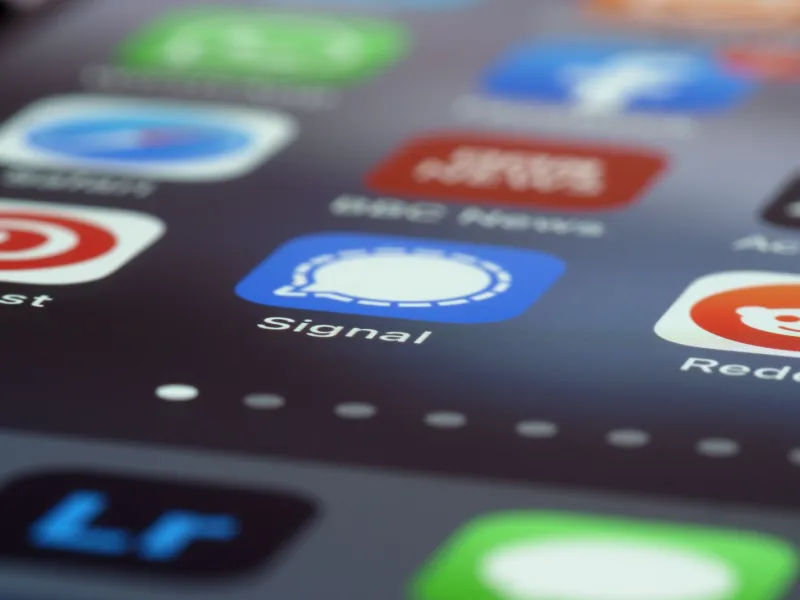
Your phone buzzes. Then again. Then three more times in the span of a minute, each alert more aggressively irrelevant than the last. A flash sale you didn't ask for. A 'friend' liked a photo you posted four days ago. A reminder to 'keep your streak alive' in an app you downloaded on a whim and haven't opened since February.
This is the ambient noise of modern American digital life — and most of us have just accepted it as the price of participation.
But in Japan, something different is happening. Quietly, without a press release or a TED Talk, a growing number of Japanese apps and platforms are doing the unthinkable: they're turning the notifications off. Not as a bug. As a philosophy.
The Cultural Math Behind the Quiet
To understand why Japanese tech companies are moving this direction, you have to understand something about how attention is treated in Japanese culture. Interrupting someone unnecessarily — whether in person or digitally — carries a social weight that most Americans don't really feel. There's a concept embedded in everyday Japanese social life around meiwaku, roughly translated as causing inconvenience or annoyance to others. It's not just a politeness rule. It's closer to a moral framework.
When that value gets baked into product design, the results look radically different from what comes out of a typical Silicon Valley sprint cycle.
Line, Japan's dominant messaging platform with over 95 million domestic users, has been steadily refining its notification architecture for years — not by adding more granular settings, but by defaulting toward less. The app's UX philosophy leans on the idea that users should feel in control of when the app enters their life, not the other way around. Rakuten, the e-commerce giant often called 'Japan's Amazon,' has similarly pulled back on promotional push alerts, betting that a less-interrupted user is a more loyal one.
And the bet is paying off.
The Data That Changes the Conversation
Here's where it gets interesting for anyone who's sat in a growth meeting and watched a product manager defend aggressive push notifications with 'but the open rates.' The short-term metrics look great. The long-term story is a disaster.
Research coming out of Japan's mobile UX community — and increasingly validated by behavioral data from Western markets — shows a consistent pattern: users who receive fewer, higher-quality notifications develop stronger habitual return behavior. They open the app because they want to, not because they were summoned. That distinction sounds soft until you realize it's the difference between a user who churns in six months and one who's still active in two years.
A 2023 study from a Tokyo-based UX research firm found that apps reducing notification frequency by 40% saw a measurable increase in voluntary session starts within 90 days. Users weren't checking in less — they were checking in on their own terms. The dependency shifted from external trigger to internal motivation. That's a fundamentally healthier engagement model, and it's more durable.
American apps have been so conditioned by the dopamine-loop playbook — notify, open, reward, repeat — that this data barely registers. But it should.
Permission Isn't Just a Legal Checkbox
When Apple introduced App Tracking Transparency in 2021, Silicon Valley treated it like a compliance headache. In Japan, it looked more like common sense finally catching up.
Japanese app developers have been thinking about notification permission not as a gate to push through but as a relationship to maintain. The framing is almost entirely different. Rather than 'how do we get users to accept notifications,' the question becomes 'how do we make notifications worth accepting.' That's a design problem, not a marketing problem.
Some Japanese productivity and lifestyle apps have gone even further, building what designers there call 'invitation-based' notification models — where the app surfaces a gentle prompt asking if the user wants to be reminded about something, rather than deciding for them. The notification becomes a conversation starter instead of a demand.
For American designers used to treating every alert as a retention lever, this feels almost counterintuitive. But the underlying logic is sound: users who opted in because they genuinely wanted to be reached are infinitely more valuable than users who are being pestered into opening an app they're already mentally checked out of.
What Silicon Valley Is (Slowly) Starting to Get
There are signs the tide is shifting stateside, even if the movement is tentative. Apple's Focus modes and notification summaries, Google's adaptive notification bundling — these are engineering acknowledgments that the current model is broken. But they're defensive features, designed to protect users from apps. They're not coming from the apps themselves.
The Japanese approach flips that. It asks product teams to take responsibility for their own noise footprint. That's a cultural shift as much as a design one, and it requires companies to trust that restraint is a growth strategy — not a concession.
A few American startups are starting to experiment with this. Calm, the meditation app, has long been thoughtful about how and when it nudges users. Some fintech apps are building 'quiet hours' directly into their notification logic. But these are still exceptions.
The mainstream American tech industry still largely believes that more touchpoints equal more engagement. Japan's most successful apps are proving otherwise — and they're doing it without a manifesto, without a rebrand, without a think piece. Just quieter phones and more loyal users.
The Real Cost of Being Loud
Every unnecessary notification is a tiny withdrawal from a trust account that took real effort to build. Users don't always consciously track this — they just start feeling vaguely annoyed by an app, then one day they delete it without quite knowing why.
Japanese UX culture understands this intuitively. Attention isn't a resource to be mined. It's a relationship to be respected. And right now, the apps that understand that are building something their louder competitors can't buy back once it's gone: genuine goodwill.
Silence, it turns out, is one of the most powerful design choices an app can make. Japan figured that out a while ago. The rest of us are just starting to listen.